
|
LDCS Executive Briefing -- DC Design Edge-ility
New and emerging technologies such as IoT, Big Data and wearable technology are making enterprises rethink how they plan and build their data centers. While traditional DCs focused on information storage and disaster recovery, there is now a greater need to locate compute and storage capabilities at the very edge of the network near where data is generated and used. Such edge computing speeds up the analysis and processing of data for on-demand access.
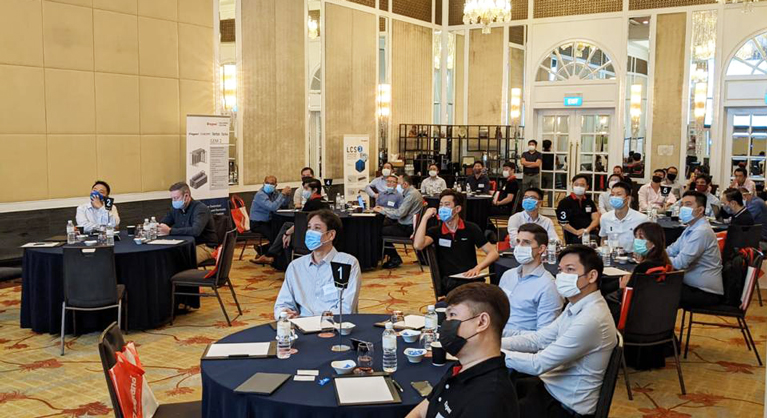
Not surprisingly the uptake of edge deployments has been very robust. To keep consultants and channel partners abreast of trends and development in edge computing, Legrand Data Center Solution hosted an invitation-only executive briefing in Singapore in early December 2020. The guests included leading consultants and system integrators for enterprise DCs.
The half-day event kicked off with a welcome address by Sébastien de Bazin, Country Manager of Legrand Singapore. Sanjay Motwani, Vice President (APAC), Raritan and Legrand then shared insights on market trends in enterprise DCs and on the factors that are driving edge computing demand.
These factors include the realization that legacy gear will soon run out of the data and traffic flow capabilities that are required of intelligent infrastructure, a greater need for centralized control, and the growing need to move analytics to the edge so enterprises have more immediate insights and results from monitoring and measurement devices.
 |
 |
As businesses move IT firepower downstream the quality of infrastructure becomes more critical as the dependency at the edge is higher, so edge DCs need to be very agile. Such edge-ility calls for a mindset change, said Motwani -- enterprises need to view their edge assets as, at the least, equally critical as those at the core.
Edge-ility requires the presence of three qualities: speed, flexibility and ease. Together, standardizing physical infrastructure and using modular assets in can engender these three qualities in core plus edge DC architectures. In addition, they enable faster rollouts and upgrades and better provisioning that leads to higher resiliency, stability and reliability.
Raritan then presented several case studies of the use of Cold Aisle Containment (CAC) in various industries. Among the benefits the enterprise users have reaped are: predictive maintenance and energy efficiency (manufacturing), reduced latency and faster execution of trading algorithms (financial services), faster access to patient data (healthcare), and faster gathering and analysis of real-time traffic, utilities and other data (smart cities).
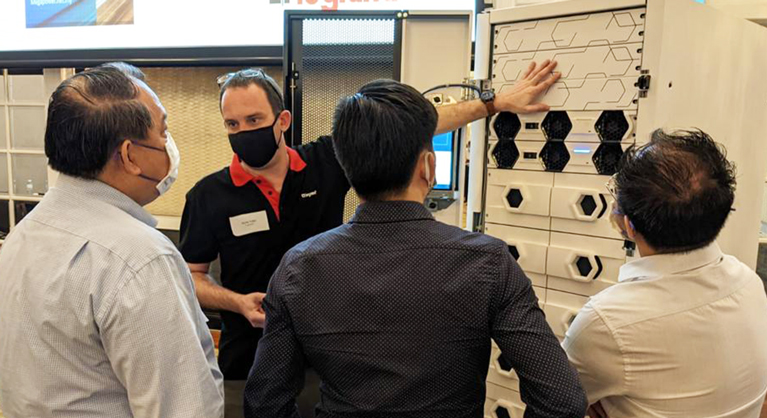
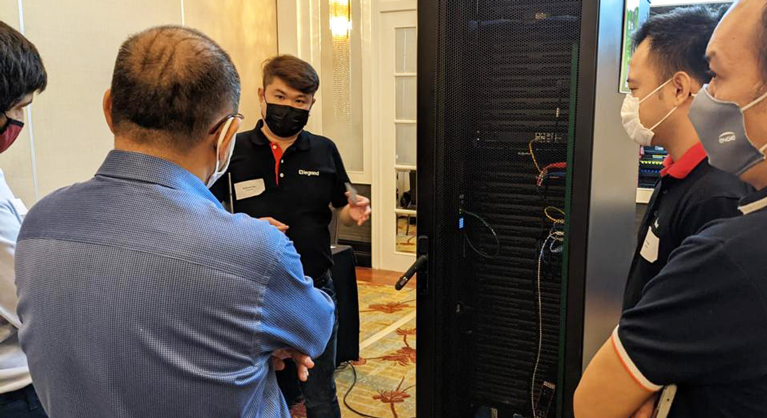
Next up were presentations and live demos of Legrand UPSs and Raritan PDUs, monitoring and other solutions suited for deployment in hybrid core plus edge DC architectures. Legrand highlighted the advantages of using modular UPS systems, which are easy to retrofit into existing DCs or deploy in new edge ones, and offer redundancy as they are hot swappable, among other benefits. Raritan spoke on intelligent rack controllers that act as a central connection point for physical rack access, environmental monitoring, asset location, and other monitoring and security sensors.